

Buddhism and Langya Mountain
Date: 2021-08-09 View: 2027
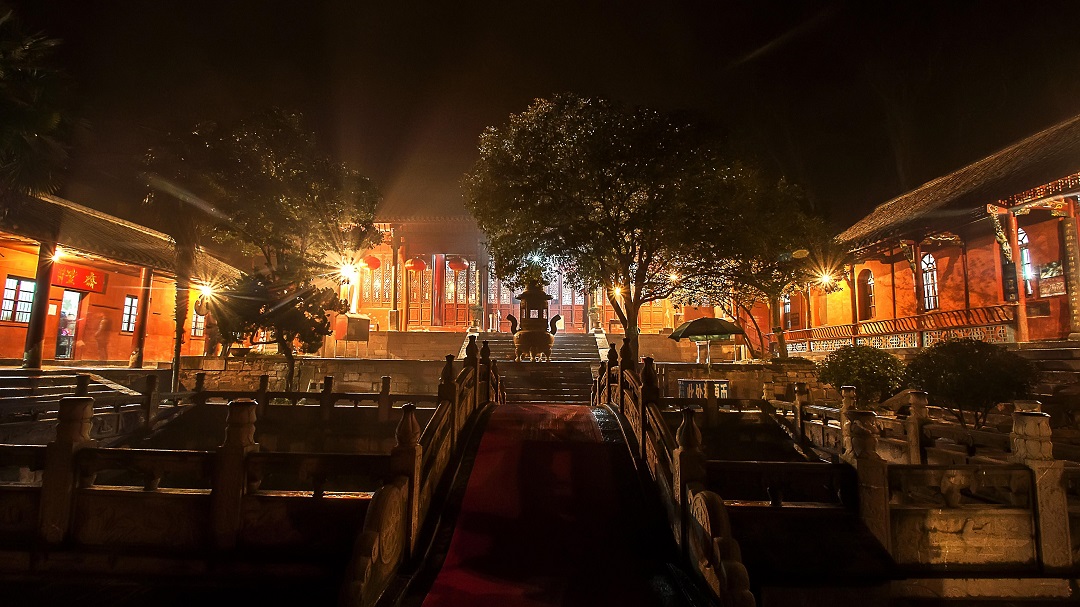
The spread of Buddhism in Langya Mountain has a history of more than 1,200 years. Along with the prosperity and decline of society, the rise and fall of Buddhism are different. In prosperity, monks gathered together, the sound of bells and drums circling the valley, and the buildings were magnificent and systematic; in the decline stage, monks scattered the temples, and Haolai spread all over the temples, without distinction between the courtyards and the wild. The Temple of Langya Mountain has undergone three renamings: "Baoying Temple", "Kaihua Zen Temple" and "Kaihua Law Temple". As for the sect, it belonged to Zen in the early period, and to Lao sect in Jiaqing in the Qing Dynasty, which has been handed down to the present day. In the six years of the Tang Dynasty (771 A.D.), the temple was built, and the hills and rocks were split, and the Zen houses were constructed. The temples were managed by various mages, such as Buddhist monks, Taoist symbols and Taoist monks. During the reign of Qiande in the Song Dynasty (963-968 AD), monasteries were re-enlarged, and the scale of the monasteries had a greater development than that of the earlier period. The monastery is magnificent, and Buddhist disciples are constantly visiting the mountains and offering Buddhist rites. More than 500 monks live in the monastery day by day, traveling in clouds, hanging bills and hanging bills. In the fifth year of Huangyou in the Song Dynasty (1053 A.D.), the temple also built "Royal Book Pavilion" and other buildings. Forty-nine stone pagodas were built in the corner of the ancient stone road on the mountain, during which the magnificent monastery was built. Buddhism is associated with the temples of Longpan, Longxing and Guangxiao. In the sixteenth year of Hongwu in the Ming Dynasty (1383 A.D.), a Buddhist management organization, the monk Zhengsi, was established in Chuzhou. Dexiao Zen Master is a monk who lives in Longxing Temple as the abbot and manages the Buddhist affairs of Langya Temple and its surrounding monasteries. Here, a monk from the West came to live on the face of the temple for six years. During the Jiaqing period of Qing Dynasty, Haoqing Lawyer came to live in Langyashan Temple, rebuilt Kaihua Hall, spread Nanshan Law Sect and Zhongxing Benshan Temple. The temples of the Yangtze River and Huaihe River are crowded with more than 800 monks and Zhong Ding gathers food. The Sifamen inhabit the Guanyin Temple in Luan, the Changlu Temple in Liuhe, the Jinghai Temple in Baixia and the Woodworn Buddhist Temple in Jinling. The influence of Buddhism in Benshan Temple involves several states in the whole country, which can be called "the peak time". At that time, large-scale Buddhist activities were to teach precepts and so on. During the 30 years of Guangxu in Qing Dynasty (1904 A.D.), Daxiu Lawyer came to Churen Monastery to abbot, rebuild the monastery, revitalize Buddhist affairs, and repair Buddhist temples in Longpan, Longhua, Hulu and Qingliuguan, Bengbu, etc, to manage the larger Buddhist matters in the monasteries. After Daxiu, Genru Lawyer and Transcendental Lawyer successively took charge of Buddhist activities in monasteries.
- Prev: "Walking in Taiping on the 16th of January
- Next: None

